Losing a carefully crafted Photoshop project can be a nightmare for any designer or photographer. Whether it’s due to an unexpected system crash, accidental deletion, or file corruption, the seemingly vanished PSD files may feel irretrievable. However, with the right approach and tools, you can often restore deleted projects and get back to work without missing a beat. This article dives deep into various recovery methods, from built-in Photoshop features to powerful third-party recovery software, and offers practical tips to safeguard your creations in the future.
Understanding Data Loss in Photoshop
Before you embark on the recovery journey, it’s crucial to understand why data loss occurs. Identifying the root cause can help you choose the most effective recovery method.
Possible Reasons for Deletion
- Accidental removal of files or folders via file system operations
- Software crashes or unexpected shutdowns during editing
- Corrupted file formats due to incomplete saves or external conversions
- Malware infections targeting editable content
- Disk formatting or partition errors
Signs of a Lost Project
- The file no longer appears in the original directory
- Photoshop throws an error when loading the project
- “File not found” or “Cannot open file” messages
- Zero-byte placeholder files
- Missing layers or corrupted previews upon opening
Recovering Deleted Projects Using Native Methods
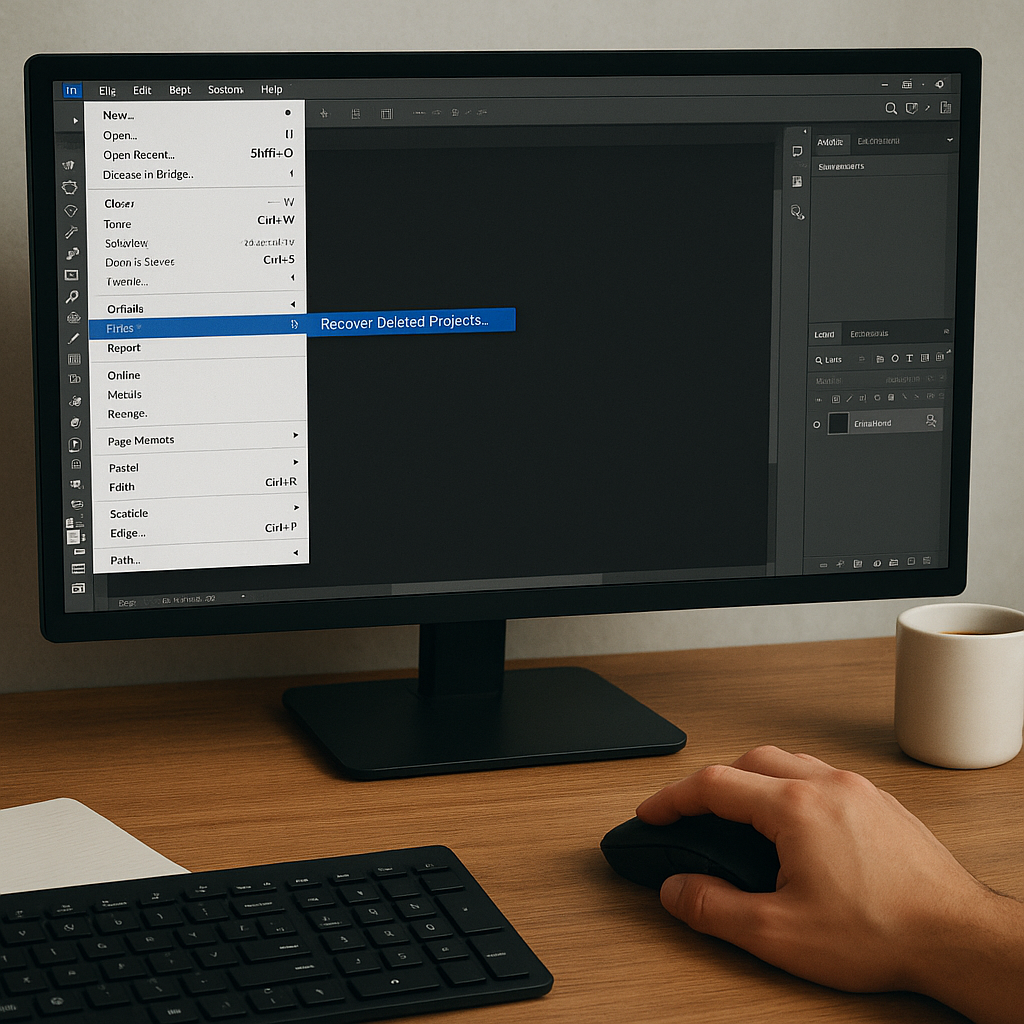
Photoshop comes with some built-in features that can help you recover unsaved or deleted content without resorting to third-party tools.
Auto-Recovery and Auto-Save
Photoshop’s auto-save feature periodically writes recovery data to a temporary location. By default, this folder resides in your system’s temporary directory, which you can inspect for unsaved versions:
- Windows: C:Users[Username]AppDataRoamingAdobeAdobe Photoshop [version]AutoRecover
- macOS: /Users/[Username]/Library/Application Support/Adobe/Adobe Photoshop [version]/AutoRecover
If Photoshop crashes, the next launch should display any available auto-saved documents. Make sure this feature is enabled under Edit > Preferences > File Handling.
Checking the Temporary Folder
Sometimes, your project may be lurking in the OS’s temp folder, especially if Photoshop was forced to close:
- Windows: %TEMP% or C:WindowsTemp
- macOS: /private/var/folders/…/T/
Search for files with the .tmp extension and use Photoshop’s Open dialog to point to these files. Renaming a .tmp to .psd can sometimes allow it to open correctly.
Utilizing Adobe Creative Cloud Versions
If you save your projects to Adobe Creative Cloud, version history may be your savior. Navigate to the Creative Cloud web app, locate your file, and review the version history panel. You can restore any previous iteration with a single click.
Using Dedicated Recovery Software
When native options fall short, specialized recovery software can scan your storage device at a low level to retrieve deleted content. Here’s how to maximize your chances:
Choosing the Right Tool
- Look for support for PSD files and common image formats
- Verify compatibility with your operating system (Windows/macOS/Linux)
- Check for preview capabilities before actual recovery
- Opt for read-only scanning to maintain data integrity
Step-by-Step Recovery Process
- Install the software on a separate drive to avoid overwriting lost files.
- Launch a deep scan or disk scanning session on the affected partition.
- Browse recoverable files in the preview pane; filter by .psd or date modified.
- Select desired projects and choose a safe restore destination (different drive).
- Verify the recovered files by opening them in Photoshop.
Popular Recovery Software Features
- Quick vs. deep scanning modes
- Filter by file type and size
- Preview layers in PSD documents
- Recovery of deleted, formatted, or corrupted files
- Resume interrupted scans and export logs
Preventive Measures to Avoid Future Loss
Recovering lost work can be time-consuming and stressful. The best strategy is to prevent data loss before it happens. Implement these best practices to ensure your projects remain safe and accessible.
Implementing a Robust Backup Strategy
- Use an automated backup service or cloud storage solution
- Follow the 3-2-1 rule: three copies, two different media, one offsite
- Schedule incremental and full backups regularly
Leveraging Photoshop’s Version Control
Enable the File Versioning feature or manually save incremental versions of your project (e.g., design_v1.psd, design_v2.psd). This makes it easier to revert to an earlier stage if something goes awry.
Maintaining System Health
- Ensure your operating system and Photoshop are up to date
- Run periodic disk error checks and defragmentation
- Protect your workstation from malware with a reputable antivirus
- Use an uninterruptible power supply (UPS) to guard against sudden outages
Training and Workflow Optimization
Educate team members about proper file handling, naming conventions, and backup protocols. Streamline workflows to minimize manual steps that could lead to accidental deletion.