Accidentally reformatting a partition can lead to panic and confusion, but with the right approach and recovery tools, it’s possible to restore lost data. This guide explores the technical background of partition formats, outlines essential principles for effective file recovery, and offers a practical walkthrough using specialized recovery software. Whether you’re a casual user or a seasoned technician, you’ll find strategies to maximize the chances of retrieving your invaluable data.
Understanding Partition Formats and Data Loss
What Happens When You Change a Partition Format
When a partition is reformatted, the file system structure—such as FAT32, NTFS, exFAT, or ext4—is overwritten. Formatting typically rebuilds the partition’s metadata tables, redirecting pointers to data sectors while often ignoring the underlying content. The actual files remain intact on the disk until new data is written over them. However, the operating system loses the mapping information, making file recovery a challenge if not handled properly.
Common Scenarios Leading to Data Formatting
- Upgrading or downgrading an operating system and selecting the wrong partition during installation.
- Converting partition types without backing up critical files.
- Accidental clicks on the Format button in disk management utilities.
- Disk errors prompting users to reformat a corrupted volume.
- Misinterpretation of multi-boot setups, leading to formatting of shared partitions.
In each of these scenarios, the key to recovery lies in avoiding further write operations and choosing a robust restoration method.
Key Principles of Effective File Recovery
Importance of Halting Write Operations
The moment you realize a partition format error, immediately stop any disk operations on the affected drive. Continued use risks overwriting the sectors containing your lost files. Even simple actions like launching applications, installing updates, or creating new files can irreversibly damage the integrity of recoverable data.
Scanning Methods: Quick vs Deep
Most recovery software offers multiple scanning options:
- Quick Scan: Rapidly searches for recently deleted entries in the file allocation table or master file table. Suitable when formatting was shallow or metadata remains intact.
- Deep Scan: Examines every sector for recognizable file signatures, reconstructing files even if directory structures are lost. This process is slower but often more comprehensive.
- Signature-based recovery uses known patterns to locate documents, images, videos, and archives. It’s indispensable when the file allocation data is entirely overwritten.
Choosing between these scans depends on the severity of the format operation and the value of the files you wish to retrieve.
Choosing the Right Recovery Software
Features to Look For
Your selected tool should offer:
- Read-only access to avoid accidental writes.
- Support for multiple partition formats and file systems.
- Intelligent file signature algorithm library for deep recovery.
- Preview capability to verify the recoverable files before restoration.
- Customizable scan parameters, including sector range and file type filters.
- Resumable scan sessions to avoid starting over if interrupted.
Popular Tools Overview
- Software A: Offers an intuitive interface and fast quick scans, ideal for novice users. Supports snapshot imaging to preserve disk state.
- Software B: Advanced configuration options with command-line control, favored by IT professionals for automation and scripting.
- Software C: Cloud integration allows remote recovery for network-attached storage devices.
- Software D: Specialized in multimedia recovery, with enhanced filters for pictures, videos, and audio formats.
Step-by-Step Guide to Recover Files
- Stop using the disk: Disconnect or unmount the partition immediately to prevent overwrites.
- Create a disk image: Use a cloning utility to produce a sector-by-sector copy. Work exclusively on this image, preserving the original media.
- Install your chosen recovery tool on a separate drive or another system.
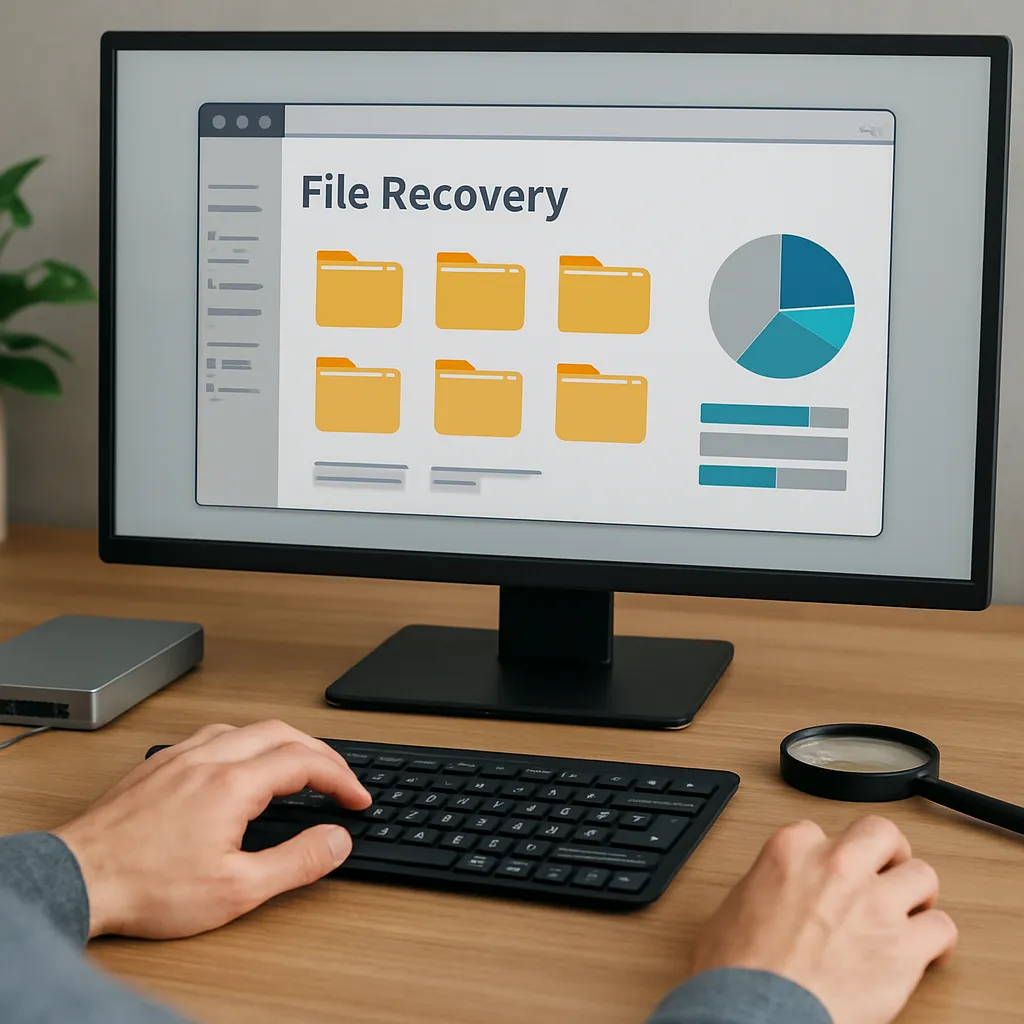
- Load the disk image into the software and select the target partition.
- Begin with a quick scan. If results are incomplete, proceed to a deep or signature-based scan.
- Filter the file list by type, size, or modification date to isolate the most valuable files.
- Use the preview function to confirm file readability before extraction.
- Recover files to a different drive, never back to the original partition.
- Verify integrity of recovered files by opening them with native applications.
Advanced Tips and Troubleshooting
- In case of bad sectors, enable the software’s error handling mode, which skips unreadable sectors and recovers accessible data.
- If the partition table is severely corrupted, use a dedicated partition repair utility before recovery to restore basic structure without overwriting file data.
- For RAID arrays, ensure you reconstruct the array in a RAID recovery environment or use software that supports RAID metadata layouts.
- When file names are lost, rely on sorted file signature lists to approximate original groupings by extension and order.
- Regularly maintain backups and employ partition snapshots to avoid future reformat-based data disasters.
By following these principles, choosing appropriate software, and applying the right techniques, you can significantly improve the odds of successful file recovery after an inadvertent partition reformat.